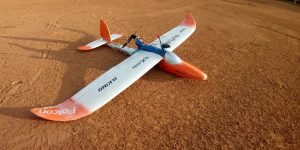
The traditional plane with a pusher prop is an idea that I enjoy, it happens to make up a large percentage of my traditional plane fleet. The traditional tractor drive planes with a propeller up front tend to launch easier and fly well, But with failed launches or bad landings the props break. It’s hard to ignore the liability of having a large spinning propeller out in front of the plane. That’s why I prefer the pusher style of traditional planes. There are less broken props, less worries about adding throttle when you’re landing, less worry about failed launches and poor landings. They are also great for FPV footage as there are no propellers blocking the view.
I am a bit of an aficionado when it comes to the rear-pusher traditional plane segment. I’ve tried most of the notable planes, except for one. The Strix Stratosurfer was one that always intrigued me. By the time it came on my radar the plane was hopelessly sold out. The pandemic was a rough time for the hobby, with so many models out of stock. Now that it’s back in stock I jumped at a chance to review it.
My expectations
There is a similar style plane to the Stratosurfer, the VolantexRC Ranger. The main selling point of the Ranger over the Bixlers, SkySurfers, and EZ Stars is the rigid plastic fuselage. I find that the rigidness helps prevent the tail from bowing or warping. This tends to be very common with foam versions of these planes. The other thing is that after many bare foam grass landings the foam gets hopelessly dirty. The plastic does as well, but cleans up nicely.
The Stratosurfer has that famous orange plastic fuselage. Thus I am expecting something that flies well like the Ranger. The flat wings means that it can take a bit of speed. But, what should be different is that the extra capacity of the fuselage means that this is a plane that isn’t a glider like a Bixler. This is a plane that can be loaded up with batteries and flown great distances which is great for FPV. Or it could be built to be very fast and somewhat agile.
The build process

My approach was to first start painting the wings. I am sorry, I cannot get excited about white wings with decals anymore. I like my planes to have a bit of flair. Thus a good paint job with plenty of time to dry was what I was after.

During the time of building this I was traveling a lot for work and thus I would pick up an hour or two here and there. I am not certain if I received what others will get, my plane was strictly bare foam and each control horn needed to be put on the control surfaces. Not a big deal, and it helped me assure they were secure. This rat’s nest of wires was the electronics outside the plane, tested, before installation.
My approach to electronics.
The interesting thing about the Stratosurfer is that it does give us options. People have been placing fairly large flight packs in the Stratosurfer and taking it out for moderate long range FPV applications. Since the Stratosurfer has been out for a while, it wasn’t an obvious choice for long-range FPV when it first came out. But now, thanks to the miniaturization of FPV gear, it’s an option.
I decided to build the Stratosurfer as a medium range platform with extended flight times. Anything north of 30 minutes makes me happy. Therefore I didn’t put the receiver and VTX out on the wings to fight for more range. I have a five minute rule when it comes to FPV planes in many areas I fly. I only fly in areas where I can get to a crashed plane in five minutes because many people treat things falling from the sky like manna from heaven.
Electronics placement

I made hole in the fuselage to run the wires for the camera and GPS unit. If I were to make the Stratosurfer a long range plane my build options would look different. I would have redundant receivers built into the wings and one in the fuselage along with the highest power VTX I could find. Instead I am building the plane with one receiver, and a modest VTX.
Receiver choice and placement
For this build I chose the FrSky R9MM 900mhz with the dipole T-antenna going vertically. The reason why it’s vertical is because the R9M ACCESS module on the back of my FrSky X9D Plus SE 2019 has a zip antenna going in the same orientation. Thus the antenna was mounted to the vertical stabilizer. When I switch over to the Tandem X20S transmitter with the built in 900mhz module the antenna would be placed on the horizontal stabilizer because the antenna in the transmitter is going horizontally, not vertically.
What happens with the antenna on the tail is that you get the best reception when the plane is flying away from you, and the reception drops when the plane is turning toward you. That’s why the single best placement for antennas would be on the wings on the extremes. There is nothing to block the signal. The downside is that this adds to weight and drag on the wings. I tend to shy away from doing this unless it’s a plane I am building for distance.

Video Transmitter
The video receiver used on this plane was the AKK X2 Ultimate. This is the AKK X2 “Ultimate.” It’s “ultimate” because it puts out the legal limit of 1 watt of power. Oh, I can get more powerful VTX units from other parts of the world mailed to me. But, no thanks. This is more than fine for my needs. I place it in the middle of the fuselage, behind the prop so that it gets additional air cooling as it flies along. So far so good. I use 5.8ghz for video (analog) and I am currently waiting for the HD technology to pick an obvious winner before investing in a new system. The small Foxeer Lollipop 3 is a fantastic little VTX antenna. I am impressed with how good the video looks. For all limitations of analog, I am still very happy with the video quality that it presents.

GPS
About the only disappointment with the build was from a brand I’ve had nothing but success with, the Matek MQ8-5883. It’s just very slow to pickup satellites. Maybe it will improve over time. It’s on the nose behind the FPV camera. My goto GPS is the BN-220. It works well for my needs, is dirt cheap, available everywhere, and in my part of the world picks up more satellites than I really need.
FPV Camera

I went big money rock-and-roll on the FPV camera, the Foxeer Predator 5. Well, big money for analog. And to be honest, I got a bunch of these Predator 5s on a black Friday sale about a year ago. I am beyond impressed with the video quality of this camera. Sure it’s not HD but for my needs it’s fine.
The Stratosurfer has a long nose, and unfortunately with HD camera systems you need to keep the camera and VTX fairly close to each other which is fine for race quads, not so wonderful for fixed wing planes with long noses. What ends up happening is the bottom of the screen gets blocked by the nose. I don’t mind seeing a bit of a nose in the foreground of my FPV feeds, but for the view from where the canopy mounts it’s a bit too far back. You end up seeing too much of the nose. Though the placement on the tip of the nose in this build isn’t the prettiest, the unobstructed view makes it all worthwhile.

Speed Controller
The Holybro Tekko32 45A is what I opted for. It’s a bit more expensive than the usual 35a $14 BLheli32 speed controllers I use. When combined with a good motor, the Holybro speed controllers are rock solid. They are highly recommended by Luke Attubato who is like a Foodie, but with fine FPV electronics.
The Flight Controller
It’s easy to get a bit carried away with flight controllers. Is there a “right” flight controller for a plane? The quick answer is that many flight controllers sold today are more than fine for INAV fixed wing planes. Typically, the cheaper ones are limited on UARTS and the more expensive ones are more UART abundant. The H743 version of the microcontroller I believe is a good investment. The H743 is part of a newer series of microcontrollers with an updated M7 ARM processor. INAV is very efficient and wasn’t struggling with the F4 flight controllers. The H7 leaves the flight controller with even less to do per clock cycle. Still, at some point the code developers for INAV will start to think about what they can do with all the excess clock cycles. My thinking is that perhaps a few years down the road you may see new INAV features that start to tax the processor. A flight controller, if built well and well maintained often lasts many years and risks going technologically obsolete before it fails. It’s not that much more expensive to get the latest technology, and whenever I have a chance to buy a new flight controller, I want something modern.
I made a diagram of how I plan to hook up the immediate UART needs. I did this with the Snipping Tool in windows. It’s not pretty, it’s down and dirty. A couple of times a year a servo connector pops off, and while I’m at the field I can open up a Google Doc, look at a photo like this in a document and know exactly what gets plugged where.

Flight Controller Placement
I placed the flight controller on the pedestal that comes with the plane, right under the main wing. It was a bit tight when it was first wired up, but it worked fine. What is nice about this is that the flight controller is very much out of the way. The H743-Wing has its main USB-C connection port on a satellite board which means I can still easily tune the flight controller without having to remove the wing to get access to it. This helps keep the plane from looking like a rat’s nest of wires. For the Stratosurfer, if you don’t plan on taking off the main wing for any reason (more on this later), you may want to get a Matek flight controller that has this satellite option. I’ve also seen the flight controller mounted near where the battery sits. This isn’t as neat but it will work.

The Motor
The motor that came with the plane was a SunnySky X2212 V3 2450KV which is a custom made motor for ReadyMade RC. It’s surprisingly powerful and efficient. A 6×4 prop works very well though can be loud at times. Still, I freaking love SunnySky motors and it’s a no brainer to pick up this motor at the time you order your kit. This motor is great. Since I have a robust ESC I may try running this plane on 4S to see how she does.
Servos

The plane takes four 9g servos, and six if you use flaps. The servos provided to me for this build were EMAX ES08MD II. The “M” is for metal. The “D” is for digital. Thus, these are metal geared digital servos. To be quite specific, they are 9g cored metal gear digital servos. In the big picture, the cored servos are the bottom rung of servo technology. But for a plane that weighs less than 5 pounds cored servos are fine. For the money, these EMAX servos are a great value. The digital nature of the servos makes this plane fly exceptionally smooth. You can spend a lot more for coreless servos, but you may not see any difference in performance.
Paint

My paint of choice is Rust Oleum Gloss Protective Enamel. It goes on very thick and doesn’t need as many coats. It’s an oil based paint that comes in a variety of colors and is easy to find in the United States. It also does a nice job of helping to fill in the pores of the foam. When you paint foam, you simply have to hold the paint can further back than normal on the first couple of coats. There is a chemical in the paint that messes up the finish of foam. If you hold the paint can back, this isn’t a problem. After a good first coat, feel free to move in closer on the second coat.
I laminate the plane, which sometimes makes the plane look like it’s inside a sandwich bag. It does provide protection for the paint, adds to the plane’s rigidity, and reduces drag.
Flight performance

I went back and forth on CG for a number of days, until I finally decided on something that felt about right, based on my experience with the Bixler. I put in a 3S 5200mah LiPo battery. It turns out that due to its low C rating, it weighs about as much as a 3S 4000mah with a higher C rating. It was short and stubby and just barely fit. But, it works very well.

My maiden flight was a bit overly cautious but went fine. I took it out again a second time and it flew for around 25 minutes at a local school. The problem was that I had to do somewhat frequent turns. The Stratosurfer has no problems turning, but I wanted to cruise. The Stratosurfer wants more space.
Then I took it to an area where the plane can shine, the beach. On one particularly clear winter morning I ran up and down the beach as far as I wanted to go. Very infrequent turns. It held a course very true and steady. I had a “locked in” feeling with the Stratosurfer and I was just enjoying the view. The flight lasted for a blessed 37 minutes. The days leading up to this flight were some of the harder ones I had in a while. I left before sunrise and the first plane I took up was the Stratosurfer. It really was INAV therapy for me. It’s like the plane told me “I got this, just watch in the goggles and enjoy.” I was doing everything I asked, climbing, diving, rudder turns, coordinated turns, and uncoordinated turns. I flew along the sand, along the water, and the plane just was so well behaved. It was a flight that made the entire trip to the beach worthwhile, and for nearly 40 minutes I was flying like a bird. When it came time to land the plane skidded along the cement of the boat launch we were on and then ended up stopping abruptly in the sand. A little dust off and she was done. The flight was followed up by my trusty old AR Wing which wasn’t nearly as perfect as the Stratosurfer flight. Right away I could see the difference.
How the plane compares
Since I tend to love this style of plane, I have quite a few. Let me throw out a couple of planes that don’t really compare. The Bixler 1.1 and the Ranger 2000. The Ranger is too large and has the big plane feeling, and the Bixler 1.1 is a bit more park flier feeling.
Bixler 2
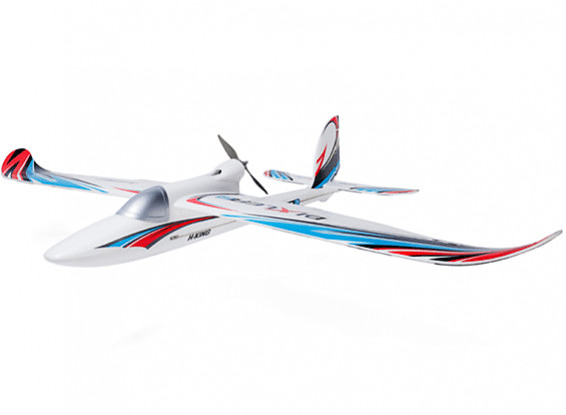
The Bixler 2 has similar specs to the Stratosurfer. You would expect similar performance, when in reality they are quite different. The Bixler 2 is lighter, a bit more floaty, tends to wander around at times and can be greatly influenced by the weather conditions. The Bixler 2 can gain altitude very quickly while flying level. Thus, part of the battle of flying the plane is making sure it doesn’t wander up too high. I do like the floaty nature of the Bixler 2, which is why this plane has always been a favorite of mine.
The Stratosurfer flies more like a traditional plane with the prop up front than a Bixler style of plane. They may have similar specs but they really are very different from each other. There is a case for owning both a Bixler 2 and a Stratosurfer.
Bixler 3
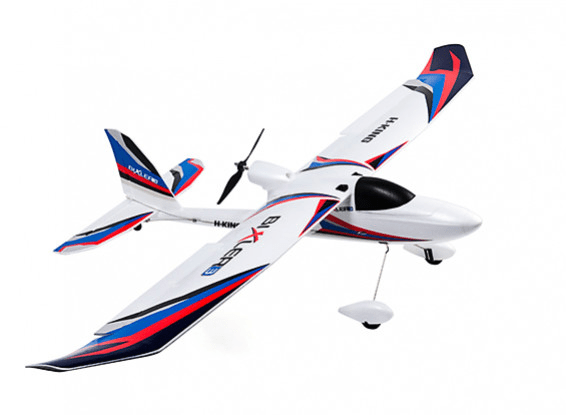
The Bixler 3 is a bit of an odd duck. It’s an over-engineered plane and the landing gear makes the plane fly like its lumbering in the air. Take the landing gear off and it’s great. Hands down my favorite FPV plane so far. I freaking loved this plane! Smooth and stable with plenty of space in the fuselage for FPV gear.
The Bixler 3 never quite got the respect it deserved as a viable FPV platform. Larger than the Bixler 2, floaty and yet it flies straight and true though it can be impacted by weather conditions. As an FPV platform I like the Bixler 3 a tad bit more. The Stratosurfer isn’t far behind. I like how the wings detach on the Bixler 3. If there was something I could wish for the Stratosurfer, it would be the Bixler 3 wing mounting system. If I were to keep just two planes, they would be the Bixler 3 and the Stratosurfer.
Ranger 1600

There are a lot of similarities between the Ranger 1600 and the Stratosurfer. The Ranger 1600 also has the plastic fuselage which also helps give it long flight times and more of a dialed-in feeling over the Bixlers. The 1500mm-1600mm size is just perfect for this size of plane which is why the Ranger 1600/ Bixler 2 & 3/ and Stratosurfer are in the zone of excellence.
The Ranger 1600 still isn’t my preferred plane over the Bixler 3. It’s tight for FPV gear in the fuselage. But, the knock-out factor for me, the thing that kills this plane is that getting it only as a PNP is the one thing that turns me off. I literally pulled out all the servos and motor when I got the PNP and started over. I like the Ranger 1600 now that it’s made to my specs ,but geez, why not sell it as a kit? I found the flights tend to be similar between the Ranger 1600 and Stratosurfer. To the point where you really don’t need both. Choose one and you’ll be happy. The fuselage seems more durable on the Stratosurfer and it can hold larger batteries.
The Stratosurfer, “good” and “not so good”
I guess by now you can figure that I do very much like the Stratosurfer. Still here are the list 5 things that I like about the Stratosurfer.

Availability & Parts
Having a plane where you can order parts is huge in my book. I currently have a plane on ice because someone crashed into it at the flying field. I need a new fuselage. This type of thing happens from time to time, through no fault of my own, or total fault of my own. ReadyMade RC had issues with the pandemic as did everybody else. But now, they are stocked again with planes and parts. If there was one reason why I would take the Stratosurfer over other planes it would be this alone. You can get the plane, and get the parts.
Pricing
I am starting to understand that the era of cheap foam planes is over. When I go to other sources to find similar planes of this size they are all over the $100 price point. There are a few “trainer” planes for around $150. In my view “trainer” means that it’s most likely going to be crashed and destroyed before the electronics fail. If you’re building an INAV plane, you’re most likely beyond a trainer. The plane can be ordered, and extra parts thrown in at checkout. I would opt for the SunnySky motor if there was just one thing I would add onto the kit order.
If you’ve been building INAV planes for a while you’re starting to notice that with a bit of care they stick around. Thus, it may be worthwhile to invest a bit more into the build because, hopefully, you’ll enjoy it more. You don’t have to go top shelf to really enjoy the Stratosurfer, but just the same, you’re not doing yourself any favors by using plastic analog servos and $5 motors. Build your Strat as something you’ll look forward to flying over and over again.
Modability
There are 3D mod files for various aspects of the plane. The most obvious are 3D printable pods. There is one print file with a GoPro mount which is compelling if you plane to use the Stratosurfer for filming. There are motor mods to allow for motors to be mounted higher and swing larger props. They often need reinforcements which are unsightly and from what I am discovering, the larger prop on the Stratosurfer may not be a great idea. Though they work well on Bixler line, for the Stratosurfer, you may just want to stick with the 6” prop. Though it’s loud. There are also a handful of useful 3D print files for dressing up the plane and making it look neater.
Flight Experience
The thing I look at is, at face value, can this plane perform well? There are a fair number of planes that need major reworking prior to the first launch. The Stratosurfer was a plane I built at face value. I wanted to give it a shot at flying before I decided if it needs more modifications. And surprisingly enough, I am going to keep it as is. That’s because it just works. It flies extremely well. One INAV autotune and it was done.
The flight experience feels a bit more like a traditional tractor-fed plane. Thus if you’re coming from flying wings or more traditional tractor fed planes you will like this more than the floaty nature of similar planes.

Noise
The 6×4 prop is just loud. If you happen to fly in an area where noise is an issue, this may be a knockout factor for the Stratosurfer. As an INAV plane we can fly it up higher where noise is not as much of an issue. When I flew it at the beach I could barely hear it as it flew over us. The sound of the waves drowned it out. I also flew it at my Sunday flying spot which is near houses. The Statosurfer wasn’t much louder than other planes at the field. So far, nobody has complained. To me the noise isn’t a knock out factor. But I won’t fly it in areas where the noise may potentially disturb people who may be sleeping in on a Sunday morning.
Wing Mounting
This is the primary weakness of the Stratosurfer; the 4 large steel screws that hold the wings down. The wings get sandwiched between the top piece and fuselage. Everything gets held together with four long steel screws. These screws are a bit of work to put in, and once you’re done, you really don’t want to remove them. Thus, I keep my Stratosurfer stored with the wings attached.
The downside is that in the event of a crash, the wings can rip where they are screwed down. One bad crash and the wings most likely will need to be replaced. The problem is that the mold for the fuselage is expensive and even minor fixed would cost a fortune. Still there seems like there could be a new solution for mounting the wings using steel shims and large plastic nylon screws that would make it so that two screws could mount the wings and they would snap on impact.
Top Mounting Motor Pod
This is the first time I’ve seen this, a motor that attaches to a detachable motor pod. If you take the wings off you need to detach the motor. This isn’t a deal breaker. Still, you may need to reverse the motor wires if the prop spins backwards, which can make assembly at the field a bit of work. What I do when I have wires I need to match up wires I use either multi-colored zip ties or different colors of paint to quickly match the bullet connectors to each other.
Landings
The plane lands just fine. The plastic fuselage just seems to slide forever on the grass. If you land with any amount of speed you’re going to watch it slide for quite a distance. Perhaps this is a good reason why you should add flaps to the Stratosurfer?

Overall evaluation
The Stratosurfer is a great plane for people who are ready for a well made, mid-fuselage pusher plane that is agile, can haul around some weight, can fly over half an hour, can fly more like a tractor plane than a Bixler, and can land on less than ideal locations.
As a plane, it’s compelling and different enough to anything else in this segment to be treated as something worth taking a closer look at. In the past, the Stratosurfer was priced much higher than similar planes. Now that the other options in the market have gone away or are selling at higher prices the Statosurfer is a good deal. Especially for what you pay for. The rugged fuselage, and well thought out engineering along with the delightful flight characteristics make it a plane worthy of being added to your hangar. A number of people have made the Stratosurfer as a Line Of Sight plane and have enjoyed it. I still say it shines as an FPV plane.
As an INAV plane

We did a survey sometime back and asked the members of the INAV Fixed Wing Group on Facebook what their normal flights were like. The vast majority of people fly less than a few kilometers away from their launch location. This is the realm where the Stratosurfer just seems to shine. In my 37 minute flight I managed to get 27 kilometers of total flight distance. This was with a 3S 5200mah LiPo battery. It wouldn’t be hard to add larger batteries and push flight times out over one hour.
If you are looking for an ultimate long range platform, there are better options. Ones that can hold a lot of batteries and still manage to fly. The Stratosurfer can fly far enough away to make it a nice mid-range FPV plane. Though Long Range flights are certainly possible with this plane, I would rather use other platforms. The Stratosurfer is just an enjoyable cruiser.
Who should buy the Stratosurfer?
A couple of decades ago the Multiplex EasyStar was the quintessential trainer plane. It was the one plane you could toss around in an empty field and eventually learn how to fly. The Stratosurfer isn’t an EasyStar. The Stratosurfer is more of a performance platform than a trainer. Thus, please don’t consider the Stratosurfer an ideal option for a first LOS plane or first INAV plane. The bolt on wings keeps it out of the realm of being a trainer that will get crashed often.
I believe the Stratosurfer is best suited for medium range FPV. Though she turns fine what I enjoy the most about this plane is straight, long runs because it flies so straight. Thus, this plane is a very good INAV platform. The Stratosurfer INAV plane is a good project for someone who has a few INAV planes under their belt. You really should take your time with the build and make it something you look forward to flying.
Should you buy it?
The Stratosurfer is quirky enough where I am coming up short on suggesting it for just anybody. This is a Strix plane and Strix planes are more next-level-up type of flying experiences. It flies more like a traditional plane and isn’t in the same league as an Easy Star or Bixler. It moves, it flies well, it’s a lot of fun. But, it’s not for everybody.
If you’re up to the challenge and the fun, by all means, pull the trigger. If you’re really looking for a Bixler flying experience of floaty fun, look elsewhere.
Truth in reviewing
The Stratosurfer was a product I received free of charge along with most of the electronics to build the plane. If I were paid by the hour to create this review my time wouldn’t be fairly compensated for how much time and effort I put into this build. The truth is that I had the Stratosurfer in my cart a number of times but never pulled the trigger. When I got to a point where the Stratosurfer would have been a logical addition to my fleet, it was sold out.
I do feel fortunate to have had the opportunity to review this plane, and add it to my collection. This is a plane I will keep and look forward to flying hopefully for a long time to come.
Regardless, this review was created without being seen by the staff at ReadyMade RC. What you read is EXACTLY what I would have told you in person about the Stratosurfer. I very much like the plane.